OptiDraft Blog
How OptiDraft Builds a Home Oven Margherita Pizza Recipe Guide
By OptiDraft 6 min read
A practical look at how OptiDraft turns a recipe brief into a usable home-oven Margherita pizza guide, from settings and draft cleanup to media selection and final editing.
What does a recipe article made with OptiDraft actually look like after generation, media selection, and editing? This case study uses a home oven Margherita pizza recipe as the example and focuses on one practical question: how do you turn a generated draft into a clear, publishable guide for home cooks?
The answer is not “let the draft publish itself.” It is to narrow the brief, keep the method consistent, add helpful visuals, and edit for cooking clarity. The published home oven Margherita pizza recipe is the finished result of that process.
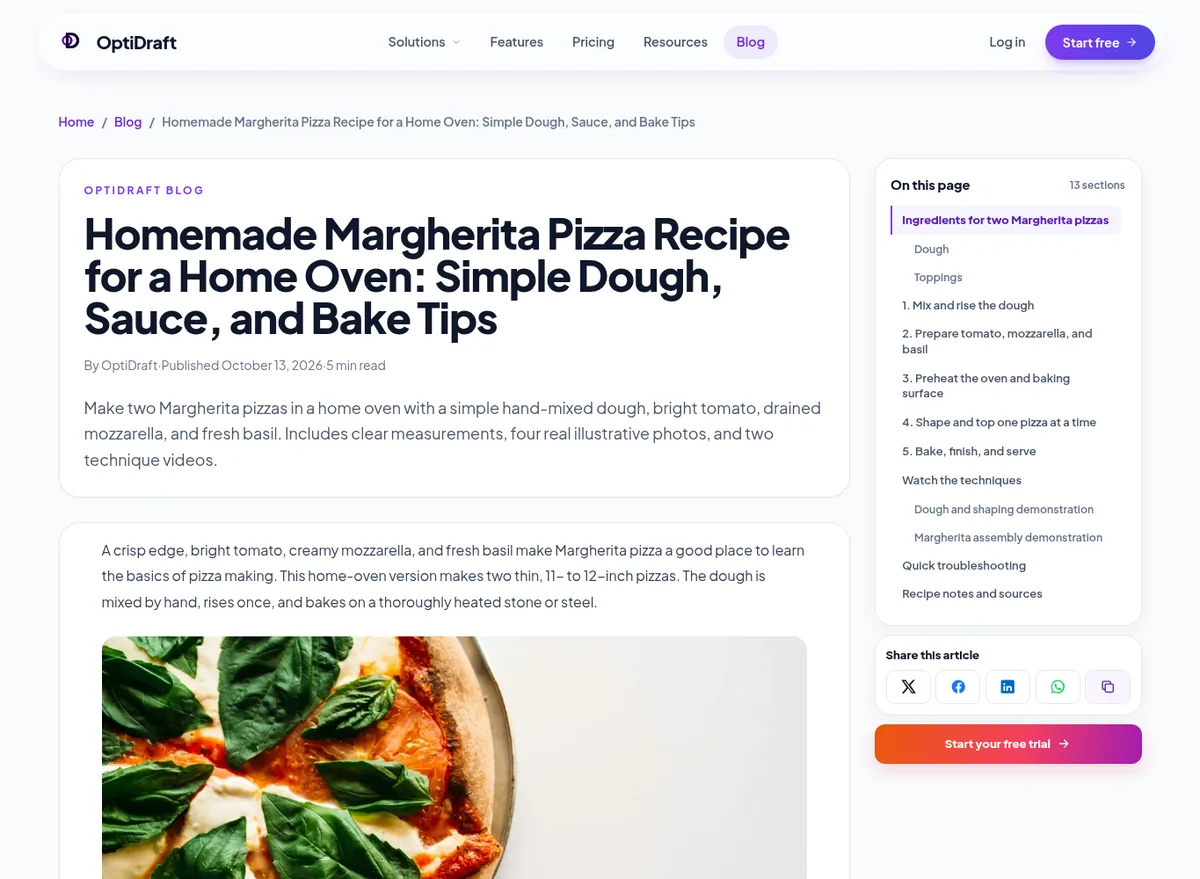
Case study at a glance
| Topic | Home oven Margherita pizza recipe guide |
|---|---|
| Focus keyword | home oven Margherita pizza recipe |
| Generator | OptiDraft, GPT-4o, small article, US English, how-to guide |
| Media from generation | Two relevant YouTube video embeds; no generated images |
| Media added during editing | Four licensed, real photographs showing the finished pizza, dough, sauce, and baking |
| Generation time | About 48 seconds for this run; editing and photo sourcing took additional time |
| OptiDraft credits used | 7 credits deducted for the generated article in this admin account; four sourced photographs were added separately |
Why this example is narrower than a general recipe post
This article is intentionally about one specific search intent: someone who wants a home oven Margherita pizza recipe, not a restaurant-style pizza dough tutorial, not a broad SEO workflow guide, and not a full product demo of every OptiDraft feature. Narrowing the topic matters because it keeps the outline, ingredients, visuals, and troubleshooting aligned with the reader’s goal.
That also makes the editorial job easier. A reader looking for a home-oven version usually wants practical guidance on dough handling, oven setup, topping balance, and bake cues. They do not need a long detour into unrelated pizza styles or broad SEO theory.
The generator settings we used
We entered the keyword and working title, selected GPT-4o and the small article size, and chose a friendly, second-person how-to guide for a US audience. The brief asked for a practical recipe structure with:
- two 11- to 12-inch pizzas,
- ingredient weights,
- a 60- to 90-minute rise,
- a 45-minute oven preheat, and
- visual cues for a browned crust.
We also requested a concise FAQ and troubleshooting section, while avoiding invented testing claims and filler that would not help a cook.
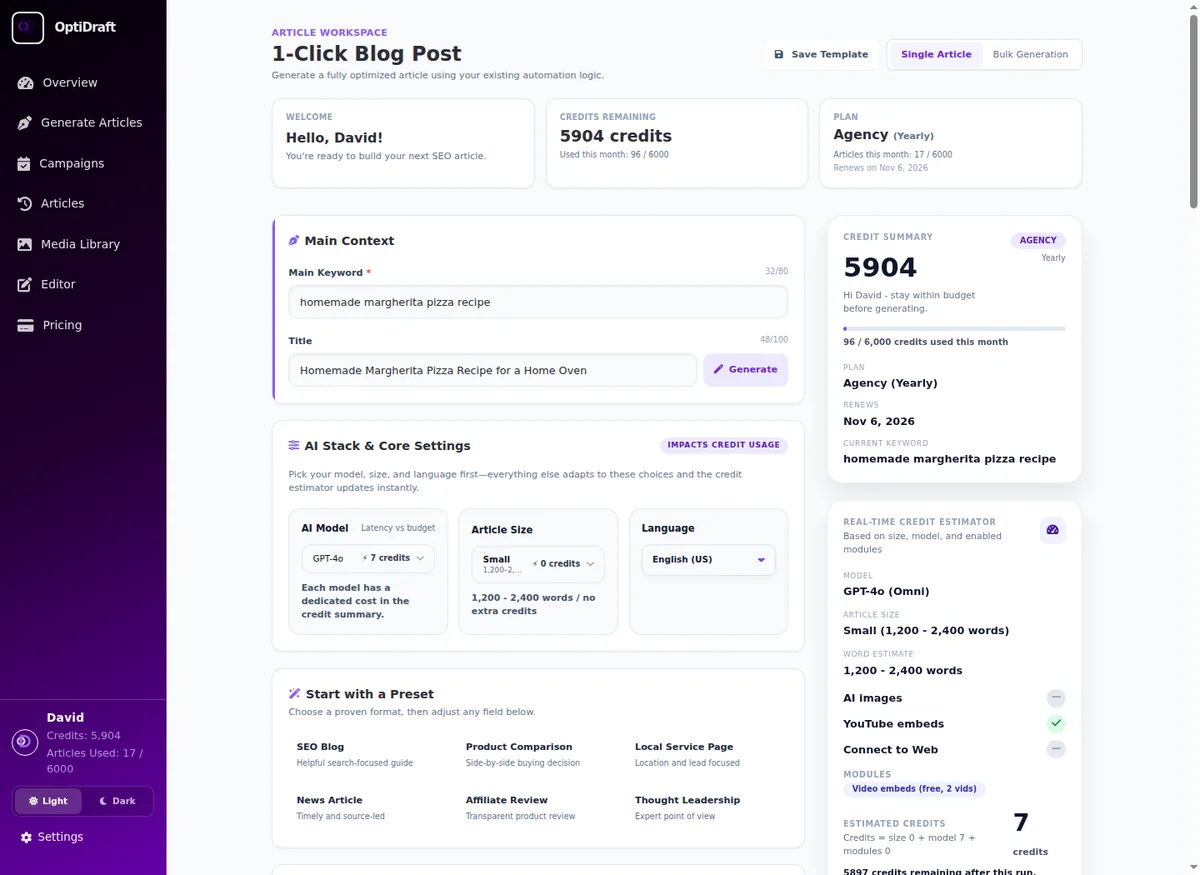
We requested two video embeds and disabled AI images because this example needed real photography. The generator supplied the two embeds, and the photographs were sourced and added later during editing.
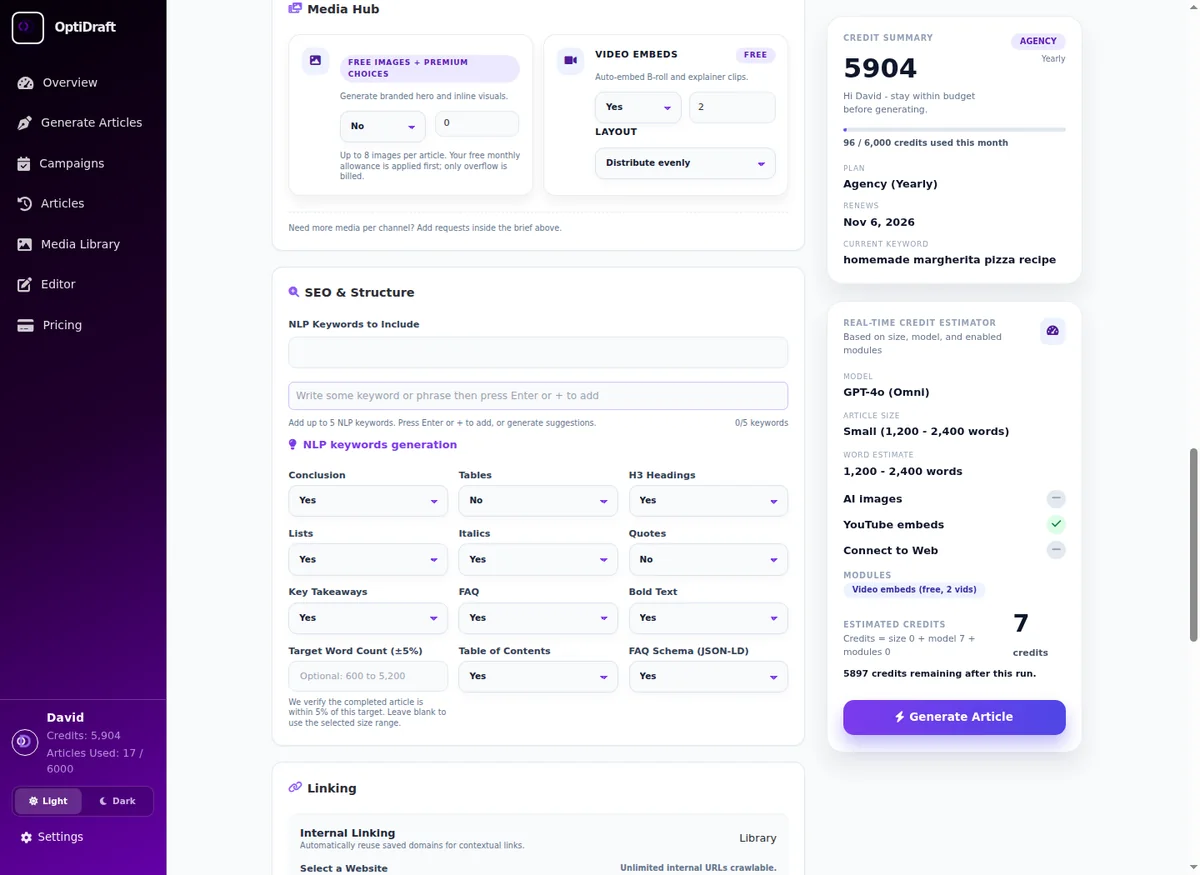
What the generator produced
The run created a draft article and a blog post under the admin account. The draft included a structured recipe and two relevant video embeds: a pizza technique demonstration from Jamie Oliver and a Margherita demonstration from Gordon Ramsay. The embedded videos use their creators' YouTube uploads; their ingredient amounts may differ from the recipe in this article.
The saved draft was useful as a starting point, but it needed editorial cleanup before publication. It repeated some instructions, handled 300 g of flour inconsistently, described 6 g of fine salt as both 1 teaspoon and 1¼ teaspoons, and included a FAQ dough formula with 3½ to 4 cups of flour. Those differences could confuse someone cooking from the page. We kept the original draft in an admin-only case record and corrected the public version.
What we changed before sharing it
- One measured dough formula: the published ingredient list uses 300 g flour, 195 g water, 3 g instant yeast, 6 g fine salt, and 10 g olive oil throughout. Volume measures are clearly approximate.
- A usable sequence: the method follows mix, rise, prepare toppings, preheat, shape, bake, and finish, with equipment alternatives and doneness cues.
- Real images with credits: we added four optimized WebP photographs from Unsplash. Each photo has descriptive alt text and an on-page credit. They illustrate the steps; they do not show a batch made from this exact recipe.
- Video context: we retained two relevant generator-selected videos and labeled them as supplementary demonstrations rather than proof that either creator tested this recipe.
- Source and testing disclosure: the final article links to King Arthur Baking's Margherita recipe and pizza guide. We say plainly that this OptiDraft example was edited but has not been kitchen tested.
How the editing choices improve usefulness
The main editorial goal was to make the recipe easier to follow without adding claims we could not support. That meant tightening the structure and removing contradictions.
1. Keep measurements consistent
Recipe readers need one set of quantities they can trust. If the ingredient list says one thing and the FAQ says another, the article stops being helpful. We kept the dough formula consistent throughout the page and left approximate volume conversions clearly labeled as approximate.
2. Match the instructions to a home oven
A home oven pizza guide should reflect the realities of ordinary kitchen equipment. That includes giving a reasonable preheat window, describing what a properly browned crust looks like, and acknowledging that not every reader has a pizza stone or steel.
3. Separate supplementary media from the recipe itself
Videos can help a reader see technique, but they should not be presented as evidence that the recipe was tested exactly as written. We kept the videos as supporting material and made that role explicit.
4. Add images that help the reader cook
The four photographs were added to show the most useful milestones: dough handling, sauce application, baking, and the finished pizza. They are illustrative, not documentary. That distinction matters because readers should not assume a stock photo shows this exact batch.
The four photographs
- Finished pizza: Blake Wisz.
- Dough: Arturrro.
- Sauce being spread: Ari Kurniawan.
- Pizza baking: Balazs Koren. This photograph shows a high-heat pizza oven; the written recipe gives home-oven instructions.
Each photograph has a smaller version for narrow screens. The first image is loaded immediately; images farther down the article load as the reader approaches them.
What this case study does and does not prove
This example shows a workflow for turning a generated draft into a clearer recipe page. It does not claim that the recipe was cooked and tested, that the photographs show this exact batch, or that publishing a page like this guarantees search visibility or rankings.
The value here is editorial: a generated draft can be a strong starting point, but a useful public recipe still needs human decisions about measurement consistency, pacing, media relevance, and transparency.
A simple checklist for editing a recipe draft
If you are using a similar workflow for your own food content, this checklist helps keep the page practical:
- Confirm one ingredient list and one method.
- Remove duplicate or contradictory measurements.
- Write steps in the order someone will actually cook.
- Use visuals only where they help the reader understand the process.
- Label videos, stock photos, and example imagery honestly.
- State any limits clearly, especially if the recipe has not been kitchen tested.
For more context on editorial planning and search intent, see our related guides on search intent and keyword mapping and SEO writing workflow.
Want to turn a keyword into a structured draft? Try OptiDraft free.